Showing posts with label Johannesburg. Show all posts

Monday, August 6, 2012

Nigel, South Africa


 In South Africa, in the province of Gauteng there is a little town called Nigel. I am from Nigel and I always wondered where the name came from - I thought it was named after maybe the founder of the town.

I was wrong and then I found this interesting titbit, which is a very interesting story.

In 1882, a farmer Petrus Johannes Marais of the farm Varkensfontein in the Heidelberg district made an agreement with a prospector named Johnstone allowing him to prospect for gold on the farm. 

Johnstone’s prospecting operations continued for a considerable time shrouded in secrecy. Then one day a stranger called on farmer Marais and made him an offer to buy the farm.

Fortunately, farmer Marais was at that time reading “The Fortunes of Nigel" by Sir Walter Scott, a story about a young man, Nigel Olifaunt, also known as Lord Glenvarloch who was the victim of a dishonest intrigue but eventually achieved his goal in life. This Nigel Olifaunt travels to London in order to ask the King to repay his father's loan. Nigel wishes to use the money to pay off a mortgage on his estate—but the Duke of Buckingham and Prince Charles already have their eyes on it. The lord is drawn into the chaotic life of the court, and when he becomes an enemy of the profligate Lord Dalgarno, he finds himself in grave danger.

The stranger's visit immediately aroused farmer Marais's suspicions to the extent that he decided to visit his farm himself. Once at the farm he found that his suspicions were well founded. With the experiences of Nigel, the character in the novel in mind, he determined not to allow himself to be cheated by cunning fortune seekers and at once set about to establish his own company. In July 1888, two years after the discovery of gold on the Witwatersrand, he achieved his goal. His company was registered as the Nigel Gold Mining Company. The town, which grew around the mine, still bears the name derived from Scott's book.

In 1888, the State President Paul Kruger declared Nigel as a public digging under notice no. 331 and since then the history and development of Nigel are inseparable from those of the gold mines. The town was little more than a mining camp until 1923, when the control of the town was passed into the hands of a Dorpvillage. The first meeting of this council was held on 2 January 1923.

The town is on the edge of the area known as the East Rand, the industrial engine room of Johannesburg.


WIN WITH ROULETTE!

Tuesday, October 11, 2011

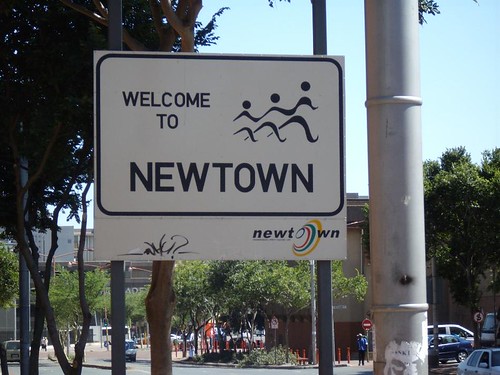
Newtown Cultural Hub, Johannesburg


Situated in Johannesburg’s inner-city, Newtown forms the heart of the city’s regeneration and reinvention of itself. Newtown is a fairly large area that lies sandwiched between the railway lines to the north, the M2 highway in the south and bounded in the east and west by West Street and Quinn Street respectively.

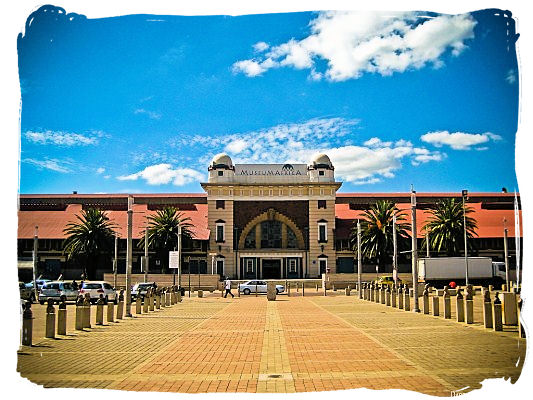
Museum Africa, Newtown
What makes Newtown so accessible is the Nelson Mandela Bridge, which links Braamfontein to Newtown, is able to carry some 3000 cars an hour and forms the new gateway into the city from the north. Newtown is now a mixed-use area with a vibrant and unique character, particularly if you take its cultural facilities into account. 

Nelson Mandela Bridge
Newtown is home to the renowned Market Theatre, which played such an important role in South African theatre during the apartheid era, committed as it was to non-racial theatre right from 1974, where a run-down Edwardian market hall was converted into a cultural arena that provided a platform for some of the country’s best actors and playwrights.

Today the complex is home to three theatres and two art galleries, and on Saturday mornings a flea market continues at the theatre. Kippies, located in the former Songwriters’ Club in Newtown, is named after the legendary saxophonist Kippie Moeketsi and serves as a venue to live jazz as it has for years, despite its closure for two years.

Just around the corner from the market complex is the Oriental Plaza where every shopkeeper owns his shop and the vibrant colour of the busy complex is a sheer delight. Rolls of fabric spew out on to tables, pots, pans and crockery, kiosks with hair accessories, electronics, leather goods, fashion and the smell of incense, samoosas and chilli merge charmingly.


Tuesday, November 9, 2010

Johannesburg

Johannesburg is about money. It's a city built on dreams of great wealth - literally built on gold. And while the gold mines are now on the outskirts of the city itself, it is money that drives this vibrant city that is widely accepted to be the economic powerhouse of Africa. Not many visitors actually put Johannesburg on their itineraries but most end up spending a day or two here anyway, as it is the main air traffic hub of southern Africa - in fact, of Africa. And guess what? After initially whingeing to their travel agents about having to spend a whole day here, many want to stay longer. Johannesburg has had very bad press. Sure - it's not Utopia, and it's a city where you need to keep your wits about you and preferably not much else, but it's not the criminalised war zone that's been portrayed in the media. And it's a truly vibey place.


If you like cities, you'll love Johannesburg. It's been through a number of incarnations and - at the moment - it's poised on the brink of becoming a truly cosmopolitan African city. While most business moved to the leafy northern suburbs from the CBD (Central Business District) in the 80s and 90s, the inner city is slowly reviving and within a few years it's likely to be a thriving urban environment. The Newtown District, with the Market Theatre, Museum Afrika and the newly constructed Nelson Mandela Bridge, is the epicentre of the urban revival. There is a lot to do in Johannesburg - mainly of the urban and cultural bent but there are plenty of outdoor escapes. One of the most popular day trips in Johannesburg is a tour of Soweto, where you can visit struggle monuments, artists in their studios or a range of informal taverns and music venues.


A similar tour, but offering a glimpse into a totally different type of urban community is that of Alex - or Alexandria Township. While also a black township, Alex is on the fringes of the very fashionable and expensive northern suburbs and grew organically to become the place it is now, which is in stark contrast to the engineered Soweto with its rows and rows of identical houses.

There are loads of interesting museums, the most notable of which are Museum Africa and the Apartheid Museum at Gold Reef City, which is an otherwise rather kitsch, but fun, theme park centred on an old gold mine. Golf courses aplenty will keep even the most avid grass addict happy. You could watch the dancing Lipizzaner stallions at Kyalami - the only operation of its kind other than the Spanish Riding School in Vienna. It's a great outing on a Sunday morning.

Or you could go for a ride in a hot air balloon , take a scenic flight in a vintage aircraft, or even do a short paddle on the Crocodile River. You could try your hand at skydiving, sandboard down a mine dump (big artificial dune made of mine tailings) or rapp-jump a skyscraper. You see - adventure doesn't really need the great outdoors.


And - this is Johannesburg, after all - you could go shopping. Big Time! And if your credit card survives the many tantalising malls and you have money to throw away, you could have a flutter at one of a number of casinos. And Sun City, a world renowned gambling complex with one of the best golf courses in the country, is only about an hour's drive away.


But the best thing about Johannesburg is its central position. It's just a hop, skip and a jump to the marvellous game lodges of Mpumalanga, Pilanesburg or Madikwe, the fascinating Cradle of Humankind, where you can muse on your origins, or the lovely relaxing and scenic Magaliesberg Wilderness. Pretoria, with its many museums and historical buildings, great restaurants and even more interesting peripheral destinations, is just a half hour's drive away.