Showing posts with label Limpopo. Show all posts

Saturday, May 28, 2011

Tzaneen, Valley of the Elephants

Described as an appealing subtropical garden town, Tzaneen is in fact the second largest town in the Mopani district in Limpopo that lies at the foot of the Wolkberg Mountains in the northern reaches of the Drakensberg range. These form an impressive backdrop to the town that is renowned for its abundant growth of just about everything subtropical - avocados, nuts, citrus fruits, mangoes, bananas and litchis, coffee, tea and cotton.
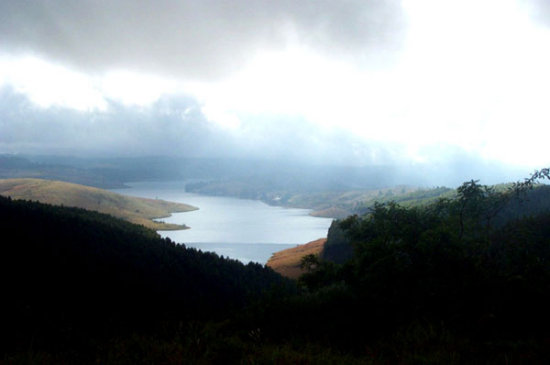
Tzaneen's Ebenezer Dam
Tzaneen also serves as a good spot from which to explore the rest of the region, with its position just below the Magoebaskloof. The special thing about Tzaneen is the constant change in scenery - lush vegetation, plantations, mountains and one of the biggest baobab trees in the world (at the Sunland Nursery between Duiwelskloof and Ga-Kgapane) mean that there is never a dull moment.

Debegeni Waterfalls, Tzaneen

The quaint little Tzaneen Museum is definitely worth a visit, on a day when you’re not out exploring the various nature reserves or the Tzaneen Dam (also a nature reserve), for its collection of ethnological artefacts like pottery, beadwork, weapons, the largest collection of pole carvings in the country. There is also a collection of royal drums from the Rain Queen, Modjadji - hereditary ruler of the Balobedu people of the area whose succession is matrilineal (the Queen’s eldest daughter is heir and males are not entitled to the throne) - whose residence is close to the Modjadji Nature Reserve.

Cycads
Just 17 kilometres from Tzaneen is the beautiful Duiwelskloof (devil’s gorge), renamed Modjadjiskloof in 2004 in the Rain Queen’s honour.

Wednesday, December 15, 2010

Soutpansberg Region, Limpopo


Lying in the northern part of the Limpopo, bordering on both Botswana and Zimbabwe, the Vhembe Region is nothing short of spectacular - the baobab, a familiar symbol that stands resolute among the magnificence of vast expanses of indigenous bush in a land characterised by the myth and legend of the Venda people and awash with the vivid colour of blue skies, a prolific wildlife and seemingly endless opportunities for exploration.


In the west of the Vhembe Region lie the craggy peaks that form the jagged spine of the Soutpansberg or ‘salt pan mountain’, which attributes its name to the giant salt pan on the west side of this range that has been a source of salt for centuries. Cross the mountain range and one falls into the all-encompassing plains of the Limpopo Valley, which stretches across the north of the country, characterised by further glimpses of the giant baobab and recurrent mopane trees.


Through this natural basin flows the Limpopo River, the country’s third most important river and a life source for the essentially hot, dry land through which it winds, giving life to more than 500 tree species, a series of farming villages and one of the world’s highest concentrations of leopard. Another important river to the region is the Nzhelele, which flows from its source on the eastern slopes of the Soutpansberg to slice its way into the Limpopo just east of Musina.


To the east lie the Lowveld and Kruger National Park, most of which falls into the Limpopo whilst to the south is the ‘land of legend’, a region that lays claim to a sacred lake, holy forest where ancient ways are still revered by traditional Venda culture. 


The Mapungubwe and the Makapane Valley are both national heritage sites, and a feast of lion, leopard, white and black rhino, elephant, cheetah and spotted hyena - most of the continent’s big game - roam here. It is rich in cultural heritage and boasts an incredible diversity of plant and animal life, but what draws visitors time and time again are the incredible unspoilt wilderness areas that seamlessly contrast with sophisticated resorts to provide warm hospitality in a destination without equal.

Tuesday, October 26, 2010

Mabalingwe Nature Reserve, Limpopo, South Africa

Mabalingwe, ‘the Place of the Spotted Leopard’ is a Limpopo Nature Reserve offering superb big game viewing and birding combined with great hospitality.


This big game, malaria-free nature reserve rests in the shadow of the Waterberg Mountains. Mabalingwe Nature Reserve is a year round safari destination – an escape from the stress of city life and a reminder of some of life's forgotten pleasures.


Just two hours by car from Johannesburg or Pretoria, this lush Limpopo nature reserve in South Africa is spread over 12 500 hectares of prime game land and rolling hills. Mabalingwe is home to magnificent big game. Guests can see Elephant, White Rhino, Leopard, Hippo, Giraffe and Sable antelope amongst 32 species of wildlife. For the avid birding enthusiast more than 250 bird species can also be spotted.

Mabalingwe provides a number of recreational facilities and there is something for everyone. In between game viewing and exciting safari activities guests at Mabalingwe Nature Reserve can enjoy racquet sports, swimming and relaxing over sun downers followed by a superb meal in the Tshukudu Restaurant.


Warm hospitality synonymous with South Africa and game viewing adventures create unforgettable holiday memories. The friendly and professional staff members at Mabalingwe Nature Reserve, Limpopo, South Africa, make sure that every guest is well taken care of. Shuttle transport can be arranged to the reserve with advance notice.

Recommended accommodation: Mabalingwe Nyala Lodge


Incubationer LTD