Showing posts with label history. Show all posts

Thursday, June 4, 2015

The First Prisoners of Robben Island


Robben Island is one of the most renowned islands in the world.

But do you know who the first prisoners of this island were?

It was Harry the Strandloper (“Beach Comber”) and his tribe. He was the chief of a KhoiKhoi tribe called the Goringhaicona, who were an outcast group that lived in Table Bay and were despised by other KhoiKhoi groups for their scavenging. Even Harry was a cunning man and quickly amassed herds of cattle and sheep.

Harry was picked up by an English ship for a joy ride to Batavia. During the trip he learnt the English language and when he returned to the Cape became the postmaster for the passing ships. Sailors would drop off letters which he would then pass on to other ships.

When Jan Van Riebeeck came to the Cape in 1652, Harry moved back to the mainland to help establish trade between the KhoiKhoi and the Dutch. Because he could speak English, he was made an interpreter.


The KhoiKhoi would trade livestock with the Dutch in exchange for tobacco and alcohol. One day the Dutch swindled them in a deal and in revenge Harry and a few other KhoiKhoi men stole from the Dutch. As punishment, Van Riebeek banished them to Robben Island, making them the first prisoners on Robben Island. After more than a year on the island Harry managed to escape back to the mainland in a leaking boat, and after more dust had settled he was accepted back for his job as interpreter.

Engela

Sunday, April 28, 2013

A little Town Called Nigel


In South Africa, in the province of Gauteng there is a little town called Nigel. I am from Nigel and I always wondered where the name came from - I thought it was named after maybe the founder of the town.


I was wrong and then I found this interesting titbit, which is a very interesting story.

In 1882, a farmer Petrus Johannes Marais of the farm Varkensfontein in the Heidelberg district made an agreement with a prospector named Johnstone allowing him to prospect for gold on the farm his.
Johnstone’s prospecting operations continued for a considerable time shrouded in secrecy. Then one day a stranger called on farmer Marais and made him an offer to buy the farm.

Fortunately, farmer Marais was at that time reading “The Fortunes of Nigel" by Sir Walter Scott, a story about a young man, Nigel Olifaunt, also known as Lord Glenvarloch who was the victim of a dishonest intrigue but eventually achieved his goal in life. This Nigel Olifaunt travels to London in order to ask the King to repay his father's loan. Nigel wishes to use the money to pay off a mortgage on his estate—but the Duke of Buckingham and Prince Charles already have their eyes on it. The lord is drawn into the chaotic life of the court, and when he becomes an enemy of the profligate Lord Dalgarno, he finds himself in grave danger.


The stranger's visit immediately aroused farmer Marais's suspicions to the extent that he decided to visit his farm himself. Once at the farm he found that his suspicions were well founded. With the experiences of Nigel, the character in the novel in mind, he determined not to allow himself to be cheated by cunning fortune seekers and at once set about to establish his own company. In July 1888, two years after the discovery of gold on the Witwatersrand, he achieved his goal. His company was registered as the Nigel Gold Mining Company. The town, which grew around the mine, still bears the name derived from Scott's book.

In 1888, the State President Paul Kruger declared Nigel as a public digging under notice no. 331 and since then the history and development of Nigel are inseparable from those of the gold mines. The town was little more than a mining camp until 1923, when the control of the town was passed into the hands of a Dorpvillage. The first meeting of this council was held on 2 January 1923.

The town is on the edge of the area known as the East Rand, the industrial engine room of Johannesburg.

Sunday, August 12, 2012

The Prophecies Nongqawuse


By the middle of the 19th century the Xhosa people of the Eastern Cape region in South Africa had suffered from eight frontier wars with Boers and a cattle plague brought in from Europe by settlers, which had killed thousands of animals. In their despair, they clung to the prophecies of sixteen-year-old Xhosa women named Nongqawuse who had promised her people the resurrection of all their herds and the destruction of the whites. 

On 18 February 1857, she prophesied that two suns would rise and a whirlwind would sweep the white settlers into the sea, and called for the killing of all cattle and the burning of all food supplies as sacrificial offerings. This was done: at least 200,000 cattle were slaughtered, and as a result more than 40,000 Xhosa starved to death and another 30,000 fled to other parts of the country in quest of food. Nongqawuse was arrested and imprisoned on Robben Island; she died in 1898 somewhere in the Eastern Cape, where she had been living in exile. 

The depopulated region was preoccupied by 2 300 ex-soldiers, veterans of the Crimean War, and 4 000 German immigrants. 
 

Thursday, April 19, 2012

The Post Office Tree


The first post office in South Africa was nothing more than a tree!


The Old Post Office Tree is so named because it acted as a mail system for seagoing men in the 1500’s. It is an old milk-wood tree and one of the Commanders of Cabral ships, Pedro De Ataide, left a letter of importance in an iron pot shoe under this large tree on his return journey from the East. This letter was found by the Commander of the third East India Fleet, Joao De Nova in 1501 when he was on his way to India. 


This is how the post office system started in South Africa. This is a National Monument and is generally known as Post Office tree.

Saturday, May 14, 2011

Sudwala Caves – Mpumalanga

The series of caverns called the Sudwala Caves are one of South Africa's major attractions. The caves are believed to be about 2 000 million years old and contain not only stalagmites and stalactites, but also the fossilised remains of 'collenia' a form of algae that it is believed life on earth evolved from. These 'stromatolites' were alive when the earth's atmosphere was composed of nitrogen and carbon dioxide.


Over a period of approximately 2,000 million years, water, percolating from above has eroded the dolomite of the hills, forming large caverns with strangely fashioned stalactites and stalagmites. Legend has it that there is no end to the Sudwala Caves and that they may extend for more than 40km under the mountains, as far as Lydenburg!


The awe inspiring Sudwala Caves contain the largest dolomite chamber in the world. This chamber, the Owen Hall (named after the owner of the farm) is a natural amphitheatre of about 70m in diameter and 37m in height. Interconnected chambers with a floor surface of 14,000 m square over a distance of some 600m are open to the public. The tallest stalagmite in the caves is about 11m high.


Prehistoric man used the Sudwala Caves for shelter and although there is a constant flow of fresh air in the caves, no one knows where it comes from. The caves were discovered in the early 19th century during a Swazi succession melodrama. The find was made by Somquba, son of Swazi king Sobhuza I, who, with his followers, fled here in fear of his brother Mswati. The dispute also involved substantial numbers of royal cattle.

Somquba and his people built a village next to the entrance to the caves, where they hid every time Mswati and his punitive parties arrived on the scene. Several times Mswati and his men vainly made huge fires in the entrance to smoke out his quarry. One day they struck unexpectedly and killed Somquba and many of his tribesmen. Those who survived stayed on under a headman or Induna by the name of Sudwala, hence the name - Sudwala Caves.

Tours of the outer caves are run daily and monthly, with 'crystal tours' being conducted into deeper chambers. Guided tours of the Sudwala Caves are offered seven days a week: 08:30 - 16:30. The six-hour Crystal Cave Tour takes place on the last Saturday of the month.


At the adjacent P R Owen Dinosaur Park, full-scale replicas of these long extinct reptiles are on display. A Swazi Tribal Village, curio shops and a restaurant are also located on the premises.

Thursday, April 7, 2011

Kaapsehoop

Kaapsehoop also known as Kaapshehoop or Kaapschehoop is a fairytale town with a rich and historical history which is the perfect place to unwind.

Kaapsehoop is situated 25km southwest of Nelspruit on a buttress of the Mpumalanga escarpment.
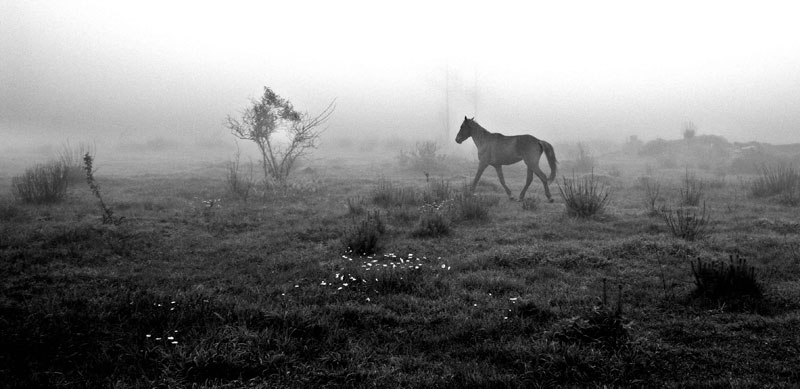
Kaapsehoop is a well looked after and protected area that has a wide array of endangered bird species to be seen. This is one of Kaapsehoop’s biggest attractions and it draws 1000’s of bird lovers each year to come and explore. If you read a little on the history of Kaapsehoop, you’re bound to find a mystical story or two about the wild horses that roam around the area. Approximately 160 to 200 feral horses roam the 17 000 hectares of Kaapsehoop and surrounds. Herds range in size from bachelor herds of around 3 to larger more structured herds of 15 to 20 horses. They are enjoyed by visitors and locals alike and share a protective interest by the residents of Kaapsehoop. Visitors can be seen staring at the horses for hours in amazement just watching them wild and free, roaming around. One of the most popular activities as you can imagine is horse riding and many horse riding trails are available including some lengthy 7 day trails.


Kaapsehoop is most popular during the summer months when morning and evening temperatures range from 18 to 20 degrees and midday temperatures around 28 to 30 degrees. Summer rainfalls are typical either late afternoon or during the evenings and are ideal for the family to get together and spend quality time together. Winter seasons are chilly yet comfortable during the day with temperatures around 20 degrees midday.


Kaapsehoop is a beautiful quiet place to visit and the wild horses will definitely amaze you. If you’re an animal lover and enjoy horse riding then this will be a wonderful holiday destination for you when you visit South Africa.