Showing posts with label travel. Show all posts

Saturday, August 4, 2012

Dullstroom, Mpumalanga


At 2097m above sea level, Dullstroom is one of the highest towns in South Africa. It has a sub-alpine climate, and is well known for its cool, often misty atmosphere. The town's stone lodges nestle along cool trout dams and streams, where bright yellow arum lilies and 120 other species of indigenous wild flower carpet the region in a kaleidoscope of color every spring. With its many pubs, restaurants, lodges and quaint village shops, this is one of the most appealing tourist destinations in Mpumalanga. 

Dullstroom is ultimately about relaxing, breathing fresh air, be it by fishing, hiking, dining out or snuggling up next to a cosy fireplace on a misty night. The town and vicinity offers a choice of accommodation, ranging from camping to well equipped, self-catering houses, up-market lodges and hotels.

Dullstroom dates back to the early 1880's, when Dutch settlers came to the area. The town derives its name from one Wolterus Dull, chairperson of the Dutch immigrants. The "stroom" (stream) refers to the abundance of water in the area: The Crocodile River, which runs through the Kruger National Park, has its origin in Dullstroom. Other major tributaries, like the Lunsklip, Klip River, Steelpoort and Elands River, do not only feed important rivers and marshlands, but have also become synonymous with some of the best trout fishing in the country.
Dullstroom and surrounds is primarily a haven for family fun, fly-fishing and country fresh air. The wide selection of elegant hotels and a variety of country accommodation, eateries, shops and activities, have made this an appealing tourist destination and an ideal stopover on the way to the Lowveld and Kruger Park.

Dullstroom - a true paradise for the nature lover.

Thursday, January 26, 2012

Beautiful Cape Town


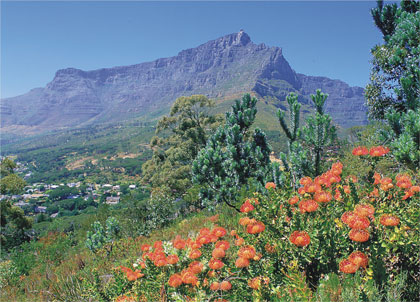
Cape Town occupies one of the world’s most stunning locations, with an iconic mountain slap-bang in its centre. As beautiful as the surrounding beaches and vineyards can be, as cosmopolitan and lively as its cultural scene, it is the rugged wilderness of Table Mountain, coated in a unique flora, which is the focus of attention. Complementing this natural beauty is Cape Town’s eye – catching way with design and colour – in everything from the brightly painted facades of the bo-Kaap and the Victorian bathing chalets of Muizenberg, to the contemporary Afro-chic décor of the many excellent guesthouses, restaurants, and bars. The city multi-ethnic population is proof of South Africa’s ‘rainbow’ nation’ and a visual record of the cities tumultuous recorded history of over 350 years.

Covering some three quarters of the peninsula Table Mountain National Park stretches from flat-topped Table Mountain to Cape Point. For the vast majority of visitors the main attraction is the 1086 m –high Mountain itself, the top of which can easily be accessed by the Cableway. The views from the revolving cable car and on the summit are phenomenal. Once you are at the top, there are souvenir shops, a café, and some easy walks to follow. The Cableway doesn’t operate when it’s dangerously windy and there‘s little point going up if you are simply going to be wrapped in the cloud known as the ‘tablecloth. ’The best visibility and conditions are likely to be first thing in the morning or in the evening.


Sunday, January 15, 2012

A Prayer for the Traveler


"May your trails be crooked, lonesome, dangerous, leading to the most amazing view. May your mountains rise into and above the clouds. May your rivers flow without end, meandering through pastoral valleys tinkling with bells, past temples and castles and poet's towers into a dark primeval forest where tigers belch and monkeys howl, through miasmal and mysterious swamps and down into a desert of red rock, blue mesas, domes, and pinnacles and grottos of endless stone, and down again into a deep vast ancient unknown chasm where bars of sunlight blaze on profiled cliffs, where deer walk across the white sand beaches, where storms come and go as lightening clangs upon the high crags, where something more beautiful and more full of wonder than your deepest dreams waits for you beyond that next turning of the canyon walls."

Edward Abbey

Sunday, January 1, 2012

Buhala Game Lodge, Kruger Park, Mpumalanga


Buhala is an enchanting Game Lodge right on the banks of the Crocodile River, the border of the Kruger National Park. What a wonderful waterhole to have at the bottom of the garden! Elephant, buffalo, hippos, and many antelope are just a few of the frequent visitors there.

Guests sitting on the veranda sipping sundowners or lazing around the pool have wonderful sightings of these fascinating animals. Fine food and wines are served on the deck under candlelight and the whole atmosphere is one of casual elegance and great comfort and tranquility.

Buhala is a marvellous place also, from which to explore the magical bushveld, which gives you the realization of true Africa.

Luxurious accommodation is provided in ten elegant en suite double/twin rooms, each with full bath and separate shower, and is complemented by superb cuisine and a well-stocked wine cellar.

Enjoy some pampering at the open deck day spa, which overlooks the Crocodile River and the Kruger National Park. The day spa offers full body hot rock massages, back and neck massages, manicures, pedicures, foot treatments and facials.

Mpumalanga offers a wealth of attractions you can visit during your stay at Buhala Game Lodge. God's Window, Pilgrim's Rest, Bourke's Luck Potholes, and many breath-taking waterfalls make for an easy day's round trip, while Swaziland and Mozambique’s Maputo are only 2 hours’ drive away. Guests of Buhala Game Lodge have access to the prestigious Leopard Creek Golf Course.

Listen to the distinctive call of the Fish Eagle as it soars gracefully above the beautiful thatch of charming Buhala, nesting cosily in expansive gardens. The well-tended family farm offers lovely nature trails set out for your hiking enjoyment.

Revel in the magnificent bird life; over 200 species have been recorded. Bee eaters, rollers, fish eagles, weavers, loeries, kingfishers of numerous varieties, green pigeons, owls, swallows and swifts, bul buls, drongos, even parrot species are regularly seen from the poolside.

Game viewing from the shade of the extensive veranda provides its own enchantment. Sit there and listen to the heartbeat of Africa.

Saturday, December 24, 2011

Dinokeng, Gauteng, South Africa


The Dinokeng area is famous as the place where one of the world’s largest diamonds, the Cullinan diamond, was wrestled from the earth and brought into the light. Situated a few minutes away from Pretoria, Dinokeng is a great destination for people who want to take a look at how people lived at the turn of the 19th century near the early diamond mines.

Dinokeng falls into the catchment zone of the Pienaars and Elands Rivers. This small town is just a few minutes away from Pretoria and is home to the third richest diamond mine in South Africa. Even though the famous Cullinan diamond was found here over a century ago, the mine is still active, bringing out a large number of high quality stones every year. The mine is open to visitors and there are mine tours allowing visitors to see how the mine worked a century ago and how diamonds are mined today with modern technology.

Dinokeng offers visitors the chance to see how people lived at the turn of the 19th century. Perhaps the best example of the old way of living is the Sammy Marks Museum.

South Africa’s first industrialist built a home in Dinokeng that is the very image of the Victorian era. The Sammy Marks House Museum is an impressive mansion with an extensive garden that was once the home of wealthy industrialist Sammy Marks. A tour through the Sammy Marks house gives visitors the chance to see how a wealthy family of the time lived.

The Dinokeng area is also home to many ruins from previous conflicts and inhabitants. Some of the old battlefields and forts are marked while others are semi-forgotten, waiting for visitors to uncover them and to remember.

For an interesting excursion into the diamond country of Gauteng, a journey to Dinokeng is in order. Situated only a short distance from Pretoria or Johannesburg, the area is a great place for visitors to see and learn about the diamond mining enterprises of the turn of the 19th century.


Wednesday, December 21, 2011

Barberton, Mpumalanga, South Africa

The gold rush of the 19th Century started after the discovery of the reef here in 1883. This resulted in the haphazard establishment of the rather rough frontier town of Barberton, and not much has changed. A few semi-hermits still pan for gold in the nearby streams, hoping to strike it lucky. And of course, on the heels of the gold came South Africa's first stock exchange.

 The gold in the area became uneconomical and richer reefs were discovered in Johannesburg. The stock exchange followed on the heels of the miners. Barberton is now a quiet and peaceful town with beautiful old buildings and set in stunning surroundings. There are some interesting attractions worth visiting in Barberton, including the nearby Songimvelo and Barberton Nature Reserve, and the Barberton Museum.

Nearby is the site of one of South Africa's least celebrated but most interesting artists - Nukain Mabuza. Mabuza is a self-taught, self-inspired artist who decorated the stones around his dwelling - painting the whole hillside in bright colours. Mabuza died in 1981, but the site, which was restored by the Barberton Museum, is open to visitors.

 Women
 Recipes

Tuesday, December 20, 2011

South African facts


South Africa is located on the southern tip of Africa and is bordered by the Atlantic Ocean on the west and the Indian Ocean on the south and east. Its neighbouring countries are Namibia, Botswana, Zimbabwe, Mozambique, and Swaziland. The Kingdom of Lesotho is situated in the eastern central plain of the country.

South Africa's total land area is 1 219 912 sq. km (471,011 sq. mi). The country is five times larger than Great Britain and three times the size of Texas.

South Africa is divided into 9 provinces: Western Cape, Eastern Cape, Northern Cape, Free State, Gauteng, KwaZulu-Natal, Limpopo, North West, and Mpumalanga.

South Africa boasts three capital cities. These are:

Bloemfontein: The location of the Supreme Court of Appeal, the highest court in non-constitutional matters. 

The Constitutional Court in Johannesburg is the highest court in constitutional matters.

Cape Town: The legislative capital of South Africa and home to the seat of Parliament.

Pretoria: The administrative capital of South Africa.


South Africa is a diverse country filled with a myriad of traditional origins, languages and beliefs, and is home to over 47 million people from all walks of life. The population of South Africa is divided into four ethnic groups, black Africans, whites, coloureds, and Asians.

Officially, the Republic of South Africa, this country is a constitutional democracy with a government and independent judiciary, all operating under a parliamentary system. The national, provincial, and local levels of government all have legislative and executive authority in their own regions. Advisory bodies operate at both national and provincial levels and are drawn from traditional leaders of South Africa.


South Africa is 2 hours ahead of Greenwich Mean Time (GTM), one hour ahead of Central European Wintertime, 8 hours behind Australian Eastern Standard Time and 7 hours ahead of Eastern Standard Wintertime. There is no daylight saving and no time zone changes between South Africa and its neighbouring countries, or between the 9 provinces of South Africa.

South Africa is a year round holiday destination, but it all depends on what kind of experience you are looking for. Different activities are better suited to different seasons.

For the best game watching, visit during a South African spring (August – October), Whale watching from mid-June to the end of October and for diving and surfing, April to September. The beaches of Cape Town, Port Elizabeth and Durban are great and best visited in the peak of summer (November – February), but are often overcrowded.

The unit of currency is the South African Rand, denoted by the symbol R. One hundred cents makes up one Rand (R1). Coins are available in denominations of 5c, 10c, 20c, 50c, R1, R2 and R5, and notes in denominations of R10, R20, R50, R100 and R200.

The Rand is weaker than the Pound and Dollar, making a visit to South Africa highly affordable by international standards. Accommodation, eating out and shopping in South Africa offers great value for money to the international traveler.

Your foreign currency can be exchanged at most local banks and Bureaux de Change. There are many banks and ATM’s all around South Africa, including airports, petrol stations and malls.

South Africa is generally a very casual country, with warm, windy days and chilly nights. Denims, t-shirts, and skirts are fine for during the day. In summer, the days range from pleasant, to very hot and evenings are balmy. In some areas of South Africa, winter is wet and windy during the day, while in other areas it is dry, hot, and humid.

Winter nights are, however, always cold. Formal to semi-formal attire is worn to work, upper-class restaurants, and clubs. Casual wear is accepted at most restaurants, pubs, and bars. The majority of clubs do not accept guests in running shoes. Bathing suits – full or two pieces - are for the beach.

Monday, December 19, 2011

South African foods and culinary terms


Here are some of the unique foods of South African and some culinary terms:

Biltong
Biltong is a national delicacy. Similar to American jerky, but very different, it is made from spiced slices of meat that are hung up – out of the sun – to dry in the wind. The most common variety is beef, but game biltong is also available. Connoisseurs claim that ostrich and kudu biltong are the best.

Bobotie is a traditional Cape Malay dish consisting of a fruity mince curry, which is topped with egg custard and lemon or bay leaves, and baked.

Boerewors is essential at a braai. It is a fatty, spicy beef sausage – there are loads of secret recipes all containing quite exotic spices such as coriander, cumin and others.

Bokkoms are definitely an acquired taste. They are small, whole mullet (called harder in South Africa) that are salted and dried. They are a bit tough to just chew on but they can be reconstituted and cooked into something approaching a Portuguese bacalhau, which makes them far more palatable.

Braaivleis
Braais are part of South African life and they are so much more than a barbecue. As well as boerewors, sosaties, pap en sous, and roosterbrood, there may be any other kind of meat and fish. Crayfish braais are very popular.

Bredie is a stew, usually mutton-based and served with rice. The most popular is tamatie bredie (tomato stew).

A bunny chow lunch is an essential part of a visit to Durban. Consisting of curry (either meat or veg) piled into a hollowed out half or quarter loaf of bread it is best eaten with the hands on the street.

Butternut squashes are large, gourd-shaped vegetables which are very similar to pumpkins but with brighter orange, more solid flesh and a more intense taste. They are often cooked over the coals at braais or made into lightly curried soups.

Coastal oysters are wild, as opposed to cultivated oysters.

Crayfish are spiny lobsters. They are delicious.

Gatsby is a form of street food found mainly in Cape Town. Cheap and filling it consists of a whole loaf of bread cut lengthwise and filled with chips (French fries), salad and either meat, curry or fish.

Imifino is a wonderful dish of wild spinach-like greens fried up with onion, spices, and perhaps a bit of chilli, and usually served with pap or putu.

A koeksuster is a sweet, syrupy, plaited confectionary not entirely unlike a doughnut but much richer. Great stuff if you have a very sweet tooth and fantastic with strong coffee.

Konfyt is the term given to any preserve. Two of the most popular are made from a type of otherwise unpalatable melon, and from green figs. With a bit of ginger and other spices, these are actually tasty and not at all cloying although obviously sweet.

Line fish is the term given to fish that has been caught locally that day on a line (as opposed to netted fish). In restaurants, it will often be the 'fish of the day'.

Milk tart is a traditional baked custard tart, sprinkled with cinnamon.

Peppadews are designer vegetables developed and patented in South Africa. A cross between a sweet pepper and a chilli, they are slightly spicy, fruity, and piquant, and are usually found pickled.

Peri-peri hails from neighbouring Mozambique. It is a fiery concoction of mainly, chilies, garlic and tomato (and a few other secret ingredients). It is most commonly used as a basting for fish, chicken, or prawns but can be used for anything. Beware; some varieties are very hot, while others are nicely tasty.

Perlemoen is the local word for abalone. Many locals claim the best way to eat this is braaied  on the beach in a piece of kelp (hollow seaweed), but it is easier to try it as a schnitzel in a restaurant, or cut into strips and stir-fried.

Pot brood is bread made in a cast-iron pot on the top of a fire.

A potjie is a three-legged cast-iron pot and it is the basis of one of our best-loved specialities – potjiekos. It's a stew made by putting in the onions first and then the items which need most cooking, e.g. meat, potatoes and/or hard vegetables. Softer vegetables are added in layers and the pot is never stirred. As it simmers for hours, the flavour permeates the whole dish.

Roosterbrood is bread made on the grill over an open fire.

Rotis are traditional Indian flat bread, which may be quite familiar.

Samosas are an Indian delicacy that has become part of the South African culinary landscape. It's a triangular fried pasty filled with curry – meat, fish or veg.

Samp is whole maize, which is cooked up rather like rice and most often served with beans, which makes it a very nutritious, high protein food highly valued by traditional societies.

Smoorsnoek is a kedgeree-like dish made of flaked smoked snoek cooked up with tomato, onion and spices.

Sosaties are chunks of meat impaled on a skewer. Traditional ones will be marinated in a lightly curried fruity sauce and then cooked over the fire but there are dozens of variations.

Whenever you travel to South Africa, make sure you try at least a couple of our traditional foods.


Sunday, December 18, 2011

Badplaas, Mpumalanga, South Africa


The hot mineral waters that filter from a natural spring in Badplaas were popular with travellers in the mid 1870's. However, the powers of the water were known to the local tribesmen long before that, naming the waters 'Emanzana', or 'healing waters'.

This thermal spring is situated in the valley of the Komati River, just 48 kilometres east of Carolina on the Barberton road. According to legends, the spring was presented as a gift to Jacob de Clerq by a Swazi chief, and by 1893, it was declared state property.

The alkaline waters of Badplaas are rich in sodium bicarbonate, and are 50 degrees Celsius when they filter from the earth. This water flows at about 32 000 litres per hour and is pumped into a warm mineral pool, as well as the private pools of the resort.

Many people travel to Badplaas with rheumatic ailments to soak away their aches and pains. They have to, however; vie for space as holiday makers descend onto this gem to enjoy the facilities offered by the large resort and nature reserve nearby.

Saturday, December 17, 2011

Aliwal North, Eastern Cape, South Africa


Aliwal North has been named after a battle which took place at Aliwal in India. As time moved on, Aliwal grew as a health resort location. Today Aliwal North is a farming district; the main products are wool, maize, wheat, beef and dairy. The main assets of the town are the 2 hot mineral water springs.

Some of Aliwal's attractions are: Aliwal North Museum, Aliwal Spa Holiday Resort, Buffelspruit Nature Reserve, De Leon Park, Garden of Remembrance, the Eastern Cape's great bio-diversity, historical places and buildings, Kerkplein Museum and the San rock art.


Friday, December 16, 2011

Alice, Eastern Cape, South Africa


Alice is a quaint little town situated 20 kilometres to the east of Fort Beaufort. Alice grew around a military encampment known as Fort Hare. It became well known as a mission centre, with Presbyterian missionaries founding a famous educational centre known as Lovedale.

This small town is well known as it is the site of the University of Fort Hare, the alma mater of Nelson Mandela, Walter Sisulu, and many other leading political figures in the liberation movement and the government.

Alice is a fascinating and historical place; however, you will get little out of it without the aid of a knowledgeable guide. The University of Fort Hare was established as a place of higher education of black graduates from Lovedale and other schools. It is the repository of the archives of the African National Congress and houses one of the most significant collections of African art on the continent.

Wednesday, December 14, 2011

South African Towns: Addo


Addo is a small and charming farming town situated in the Eastern Cape. It is close to the world-renowned Addo Elephant Park and offers a good alternative to staying in the park.

This area is not only renowned for its national park and game farms, it is also well known for its orange growing. Citrus is picked during from April through to September. The annual Citrus Festival is held at the end of May.

Visitors can also take part in the Addo Rose Festival in October, with numerous craft and food stalls. The close by Addo Elephant Park is a definite must-see and offers an array of activities, including game viewing, horse riding, 4X4 trails and so much more.

There are several historical sites that can be visited in Addo, some of which date back as far as 1829. The most well-known site is Drift House, the inn used by most people crossing the Addo drift from the old Cape Colony into the Hinterland.

Addo is beautifully set on the heart of Sunday's Valley and is a less than an hour's drive from Port Elizabeth and the nearest airport. The Sunday's River Valley Route/Addo region is only a scenic hour’s drive from the pristine beaches of the Sunshine Coast and the rich settler history of Grahamstown.


Thursday, August 25, 2011

Family Travel in South Africa


South Africa is the powerhouse of the African continent. It is a country rich in culture and history, an unrivalled abundance of natural beauty and scenic views, trendy restaurants, great nightlife, white sandy beaches, superb climate and friendly people. What else could a family traveling to South Africa ask for?

Families can visit the cosmopolitan city of Cape Town, experience the hustle and bustle of the 'City of Gold' or enjoy the amazing beaches of the coastal city of Durban. No visit to the continent is complete without descending on this African jewel.


South Africa is definitely family friendly. Everything about this country is first class, from the restaurants to the world famous tourist attractions. South Africa's tourism industry is extremely broad; therefore the country caters for everybody's needs.


Beaches, which are the ideal place for some family bonding and fun, are bountiful in South Africa. Whether you want to participate in exhilarating water sports, go swimming, surfing or just relax in the warm rays of the African sun, South Africa has a beach to suit all.

There are endless family restaurants serving delicious, uniquely South African dishes. Many of the restaurants have playpens, colouring books and pencils to keep the younger kids busy while their parents enjoy a hearty, South African feast. Guests can also stay at one of the many family friendly hotels, guest houses, lodges and holiday resorts scattered throughout this stunning country.

A good climate, clean water and excellent hygiene make South Africa a safe family destination. Adults will not need any inoculations when traveling in South Africa, unless you are traveling from a yellow fever zone.
Hepatitis B inoculations are generally recommended for children up to the age of 12 who have not completed the series of injections as infants.


The medical facilities in the cities and larger towns are excellent, so guests can expect the best of service should anything happen to you or your family while in South Africa. However, the rural areas of South Africa offer only basic health needs and do not offer a wide range of medical care but the first class services of the city are just a phone call away.

Due to the warm climate, families are advised to wear sunscreen/hat/sunglasses when outdoors, especially during 10am-4pm.

Safe, high quality water is available everywhere in South Africa and is safe to drink from the tap. Bottled water is also available throughout South Africa at most convenient stores. Do not drink any water from rivers and streams.

Most of the tourist areas in South Africa are malaria free; however, Kruger National Park, the Lowveld of Mpumalanga and the northern part of Kwazulu-Natal are at risk during the summer months. Many travellers and locals do not take anti-malarial medication, but most medical professionals will recommend you do for the complete safety and protection for your family.


Please consult your doctor before departing for South Africa for advice and professional guidance so that you and your family can safely enjoy the amazing things this diverse and magical country has to offer.

Saturday, March 12, 2011

Amanzi Maningi Guest Farm, Barberton

Amanzi Maningi is a guest farm near Barberton surrounded by beautiful trees and lots of birdlife. We have three dams which contain fish. For a quiet and relaxing getaway, this is the ideal place to be. We are also part of the R38 Wine Route.


Amanzi Maningi when translated means 'place of much water' and gets its name from the many streams and dams in the area. Situated in the honey bird area in Mpumalanga, just a short drive away from the bustle of Gauteng, Amanzi Maningi offers farm accommodation and is surrounded by beautiful fruit trees and dams. This makes for a tranquil setting, ideal for that dream getaway.


Stay over in one of our single or double rooms and after a hearty breakfast, explore the Kruger National Park during the day, or visit any of the nearby sights which include Bourke’s Luck Potholes, the Jane Goodall Institute's Chimpanzee Eden, Mac Mac Pools, Pilgrims Rest, Sudwala Caves, Dinosaur Park, Blyde River Canyon, God’s Window, Lowveld Botanical Gardens, historical mines and Graskop. You could also simply take a leisurely drive and just enjoy the tranquillity of the Lowveld. Alternatively, just sit next to one of our dams and fish whilst enjoying a splendid picnic basket. There is an abundance of waterfalls and hiking trails in the area for the more adventurous to explore, should you prefer.

We also offer self-catering accommodation, which can sleep two adults and two children. Breakfast is available on request.


After an eventful day, why not have dinner at Amanzi Maningi? We offer traditional South African fare including a braai with steak, real boerewors, pap and gravy or potjiekos with salad and homemade pot bread.

Monday, March 7, 2011

Franschhoek

Nestled between towering mountains in the beautiful Cape Winelands lies the magnificent Franschhoek Valley. This is the food and wine heartland of the country, where splendid wines are grown and our top chefs create international cuisine. Here breath-taking scenery, warm hospitality, world class cuisine and the finest wines all combine to create lasting memories.


Spectacular vineyards cover these mountain slopes settled more than 300 years ago by the Huguenots, who brought with them their age-old French wine and food culture. This is a valley rich in history centred around a picturesque village of friendly, welcoming people.

The wonderful spectrum of visitor accommodation ranges from internationally renowned auberges and guest houses to self-catering cottages on wine farms and much more besides.

In the village you will find wonderful crafts, art and antique shops and galleries. The main street is lined with coffee shops and restaurants. Only 45 minutes from Cape Town Franschhoek is the ideal base while you explore the entire Cape Winelands.

Historical and Cultural Heritage

After the revocation of the Edict of Nantes in France in 1685, when Protestantism was outlawed, hundreds of so-called Huguenots fled their homeland, 277 of them arriving by ship at the Cape of Good Hope. Many of them were given land by the Dutch government in a valley called Oliphantshoek (Elephant's Corner) - so named because of the vast herds of elephants that roamed the area. Soon after they settled here, it became known as Franschhoek (French Corner).


This heritage lives on today with the Huguenot monument standing proudly at the top of the village. The museum nearby chronicles the history of those brave pioneers, with each of the original Huguenot farms having its own fascinating story to tell.

Wonderful Wines

Driving into Franschhoek you will notice that most of the farms still bear their original French names and are usually complete with a spectacular Cape Dutch homestead, towering oaks and luscious vineyards. There are a variety of cellars, from small boutique wineries that cater for those in search of something unique, and large cellars that offer organized tours and conducted tastings.

The Gourmet Capital

Although it varies by year up to eight of South Africa's "Top 100" restaurants are in Franschhoek - the gourmet capital of the country. Leading chefs create everything from world-class cuisine to light meals using the freshest produce of the valley, complemented by the wonderful local wines. Linger a while and savour the hospitality, ambience and variety of our many great restaurants.

Accommodation

The picturesque village, ringed by tall mountains, offer the best accommodation - from stylish country auberges to small bed & breakfasts. Stay among the scenic vineyards with spectacular views or in the quaint village. Enjoy the hospitality of charming guest houses, comfortable and well-appointed self-catering cottages, intimate bed & breakfasts and internationally acclaimed country lodges in the most beautiful setting imaginable.


Shops and Galleries

A host of shops and galleries line the Main Street, providing a wonderful choice of antiques, a world class collection of artworks and interesting bric-a-brac to browse through. There are also specialty shops such as fromagerie's, a chocolate factory and a sofa maker.


Things to do

For the more energetic there are numerous walking trails in the surrounding mountains, cycling and horse-riding. There are also a number of trout fishing spots in various streams and dams on the surrounding farms.
For a wine tour with a difference hop onto a horse and visit a few of the Vignerons de Franschhoek.
If you're in the vicinity in July, try to visit Franschhoek over the weekend closest to Bastille Day (14th July) when the village celebrates its French heritage with a wine and gourmet fair and lots, lots more.


10 Reasons to visit Franschhoek

1. Franschhoek is the most beautiful wine valley in the world.
2. It is the food and wine capital of the country.
3. There are more award-winning restaurants concentrated here than anywhere else in the land.
4. Franschhoek's French heritage of more than 300 years is evident in the wine and food tradition. The magnificent Huguenot Museum and monument are worth a visit.
5. There are 101 interesting things to do in this picturesque village.
6. You can taste the wines of the valley more than 40 extraordinary wine cellars.
7. Franschhoek is a town for all budgets.
8. It is centrally located to enjoy the wonderful pleasures of the Western Cape - from the Winelands to whale-watching to exploring the mother city.
9. The culturally diverse people are friendly and welcoming.
10. The galleries and shops in the quaint main street provide hours of interesting browsing and shopping.