Showing posts with label world heritage site. Show all posts

Tuesday, August 28, 2012

World Heritage Sites of South Africa: Mapungubwe Cultural Landscape


Where the Shashe and Limpopo rivers meet, bringing three countries together - South Africa, Zimbabwe and Botswana - are the remains of an Iron Age kingdom. In 1932, a hunting party found evidence of this past civilization - pottery, iron tools, fragments of jewellery - on Mapungubwe Hill. The discovery was brought to the attention of the University of Pretoria, and an archaeological exploration began, which revealed the existence of a highly developed kingdom some 700 to 1000 years ago. 

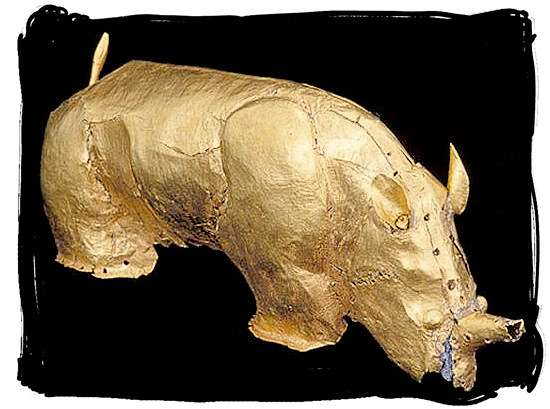
Trade beads originating from India, Egypt and the Arab world, as well as evidence of contact with Asia, have turned the theory that Europeans were first to bring international trade to southern Africa on its head. It is also believed the inhabitants of the settlement kept cattle, sheep and goats and cultivated millet and sorghum. A hierarchy is reflected in the layout of the settlement, with royalty housed on Mapungubwe Hill and their subjects below. A small golden rhinoceros, made of wood and covered in gold foil, is the most famous artifact uncovered and has become a symbol of the site; it is housed at the Mapungubwe Museum at Pretoria University. Today the hill, along with another excavation site known as K2, form part of the Mapungubwe National Park. 

Taken for Granted by K.C. Davis. $0.99 from Smashwords.com
Life as a mom can be hard, especially when it seems like no one notices everything you do.

Thursday, August 23, 2012

World Heritage Sites of South Africa: Cradle of Humankind


South Africa has eight World Heritage Sites. Here is the first of eight articles, describing these sites.

Cradle of Humankind


The Cradle of Humankind, situated in the beautiful Sterkfontein Valley near Johannesburg was proclaimed a World Heritage Sit on 2 December 1999. It was approved by UNESCO on the basis that: “The area contains an exceptionally large and scientifically significant group of sites, which throw light on the earliest ancestors of humankind. They constitute a vast reserve of scientific information, the potential of which is enormous.”

It comprises a unique band of paleco-anthropological sites across 47 000 hectares in the north-western corner of Gauteng and parts of North West Province. It has yielded some of the most extensive fossil and artifact finds on earth, particularly for the period between four and one million years ago, leading scientists to believe that the human family tree took root here.

Over time, these first people used their free hands to shape the first tool, which would herald global technology, spoke the first word and slowly migrated on a journey to populate the earth. 


There are 13 explored sites within the Cradle of Humankind; with many more still to be discovered. Among these are the Strekfontein Caves, where the famous Mars Ples and Little Foot fossils were found; Kromdraai which contains later hominid specimens; Gondolin, which is home to an astonishing 90 000 fossil specimens; and Swartkrans, where burnt bones point to the earliest controlled use of fire at least a million years ago. 

Sunday, September 25, 2011

Mapungubwe Cultural Landscape


A SOUTH AFRICA WORLD HERITAGE SITE


Set right up against the northern border of South Africa, uniting Botswana and Zimbabwe, lies Mapungubwe National Park - an extensive savannah landscape situated at the meeting place of the Limpopo and Shashe rivers. This is the land of sandstone formations, mopane woodlands, brooding baobabs, ancient floodplains and unique riverine forests that form a dramatic backcloth for the wealth of animal life - elephant, giraffe, buffalo, white rhino, gemsbok and other antelope, extensive bir life, and the more elusive mammal like hyenas, leopards and lions.


Mapungubwe is South Africa’s first kingdom, a highly complex society that marked the heart of a pre-Shona kingdom between 1050 AD and 1270 AD, only to be abandoned in the 14th century. The Mapungubwe Cultural Landscape - the virtually untouched remains of the palace sites, the settlement area dependent upon them, and two capital sites that remain - was declared a UNESCO World Heritage Site in 2003 and forms part of the Mapungubwe National Park.

The Cultural Landscape provides visitors with a unique portrait of the social and political structures of a society that traded with China and India, was regarded as the most complex society in southern Africa and was the first society since the Bushmen to settle in South Africa. The kingdom was regarded as the forerunner of the Zimbabwe civilisation and at its height, Mapungubwe, which means place of the stone of wisdom, was the largest kingdom in the African sub-continent. Some 5000 people appeared to live around Mapungubwe Hill where their ‘sacred’ leader lived in seclusion from his people.


After the collapse of Mapungubwe’s society, it was forgotten until the wealth of artefacts on top of Mapungubwe Hill - a sandstone oval-shaped hill with sheer vertical cliffs and a plateau of about 300 metres known as the ‘place of jackals’, accessible only by means of two very steep and narrow paths - were discovered.

Mapungubwe National Park: One of the country’s newest parks, Mapungubwe opened to the public in September 2004. Not only does it provide the public with an awesome window on the rich and varied animal life in this part of South Africa, but it is a chance to explore Mapungubwe Mountain and the culture that, despite being discovered in 1932, was kept largely hidden from the public until recently. This discovery included three findings of significance: a beautiful golden rhinoceros made from gold foil nailed around a wooden interior, and a gold sceptre and bowl, all uncovered from the excavation of twenty three graves on the hilltop site and which are on display at the Mapungubwe Museum at the University of Pretoria.

THE GOLDEN RHINO


The rhino is thought to symbolise power because of its ferocious temperament and is still a leadership symbol among the Shona of Zimbabwe today. The little golden rhino is not only evidence of these peoples’ metalworking skills and trade with the East - the rhino has a single horn like the Asian variety - but it also symbolises to the world that South Africa’s cultural heritage is far richer and goes back further than realised.

Thursday, September 22, 2011

Cape Floral Region World Heritage Site


A serial site in the Western Cape, made up of eight protected areas, covering 553,000-ha. The Cape Floral Region is one of the richest areas for plants in the world. It represents less than 0.5% of the area of Africa but is home to nearly 20% of the continent’s flora.


The Cape Floral Protected site displays outstanding ecological and biological processes associated with the Fynbos vegetation, which is unique to the Cape Floral Region. The outstanding diversity, density and endemism of the flora are among the highest worldwide. Unique plant reproductive strategies, adaptive to fire, patterns of seed dispersal by insects, as well as patterns of endemism and adaptive radiation found in the flora are of outstanding value to science.


JUSTIFICATION FOR INSCRIPTION: CRITERION (II)

The Cape Floral Region is considered of outstanding universal value for representing ongoing ecological and biological processes associated with the evolution of the unique Fynbos biome. These processes are represented generally within the Cape Floral Region and captured in the eight protected areas. Of particular scientific interest are the plant reproductive strategies including the adaptive responses to fire of the flora and the patterns of seed dispersal by insects. The pollination biology and nutrient cycling are other distinctive ecological processes found in the site. The Cape Floral Region forms a centre of active speciation where interesting patterns of endemism and adaptive radiation are found in the flora.


CRITERION (IV)

The Cape Floral Kingdom is one of the richest areas for plants than for any similar sized area in the world. The number of species per genus within the region (9:1) and per family (52) are among the highest given for various species-rich regions in the world. The species density in the Cape Floral Region is also amongst the highest in the world. It displays the highest levels of endemism at 31.9 % and it has been identified as one of the world’s 18 biodiversity hot spots. (Source: UNESCO).

THE CAPE FLORAL KINGDOM / TABLE MOUNTAIN NATIONAL PARK

At the south-western tip of Africa, the Table Mountain National Park encompasses the incredibly scenic Peninsula mountain chain stretching from Signal Hill in the north to Cape Point in the south, a distance of approximately 60 km. The narrow portion of land with its many beautiful valleys, bays and beaches is circled by the waters of the Atlantic Ocean in the west and the warmer waters of False Bay in the east. The Table Mountain National Park has two world-renowned landmarks within its boundaries; the majestic Table Mountain and the legendary Cape of Good Hope. See additional information about Table Mountain National Park.

Wednesday, September 21, 2011

Robben Island World Heritage Site


Robben Island was used at various times between the 17th and 20th centuries as a prison, a hospital for socially unacceptable groups and a military base. Its buildings, particularly those of the late 20th century such as the maximum security prison for political prisoners, witness the triumph of democracy and freedom over oppression and racism.

ROBBEN ISLAND

For nearly 400 years, Robben Island, 12 kilometres from Cape Town, was a place of banishment, exile, isolation and imprisonment. It was here that rulers sent those they regarded as political troublemakers, social outcasts and the unwanted of society. During the apartheid years Robben Island became internationally known for its institutional brutality. The duty of those who ran the Island and its prison was to isolate opponents of apartheid and to crush their morale. Some freedom fighters spent more than a quarter of a century in prison for their beliefs. Those imprisoned on the Island succeeded on a psychological and political level in turning a prison 'hell-hole' into a symbol of freedom and personal liberation.

JUSTIFICATION FOR INSCRIPTION: CRITERION (III)

The buildings of Robben Island bear eloquent testimony to its sombre history. Criterion (vi): Robben Island and its prison buildings symbolize the triumph of the human spirit, of freedom, and of democracy over oppression. (Source: UNESCO).


Robben Island came to symbolise, not only for South Africa and the African continent, but also for the entire world, the triumph of the human spirit over enormous hardship and adversity. People lived on Robben Island many thousands of years ago, when the sea channel between the Island and the Cape mainland was not covered with water. Since the Dutch settled at the Cape in the mid-1600s, Robben Island has been used primarily as a prison.


Indigenous African leaders, Muslim leaders from the East Indies, Dutch and British settler soldiers and civilians, women, and anti-apartheid activists, including South Africa's first democratic President, Nelson Mandela and the founding leader of the Pan Africanist Congress, Robert Mangaliso Sobukwe, were all imprisoned on the Island.

Sunday, September 11, 2011

Elephant Coast, KwaZulu Natal


KwaZulu Natal’s Elephant Coast stretches from the world heritage site of Lake St Lucia in the south to Kosi Bay, virtually on the Mozambique border. It is an extraordinary, untamed area fast growing in popularity for its incredible variety of habitats and eco-systems that combine into an unforgettable blend of adventure, unspoilt scenery and unique experiences.


Called the Elephant Coast after the country’s largest herd of indigenous African elephants that have lived in sand forests in this region for centuries, the Elephant Coast extends inland across to the Lubombo Mountains in the west, and includes the Hluhluwe-Imfolozi Game Reserve, the oldest game park in Africa - home to the big five. It is not hard to understand why the Elephant Coast is regarded as the ecotourism mecca of the Zulu Kingdom. Sand dunes blend with swamps, coastal forests, rocky shores, coral reefs, mangrove swamps, woodlands, savanna grassland, and the largest protected wetland in southern Africa, iSimangaliso Wetland Park (the Greater St Lucia Wetland Park).


Getaways to this coastline are rich in adventure, and if you’re not game viewing, birding, paddling, snorkelling, hiking, on a horse trail, or diving then you’re surely out on a boat to see dolphins and humpback whales, or watching turtles lay eggs on the beach.

Highlights of the Elephant Coast include Cape Vidal (wonderful beaches for deep-sea fishing and famous for whale watching); Sodwana Bay Nature Reserve (the mainstay of scuba diving); Kosi Bay (one of the most unspoilt regions with numerous lakes where you can watch local fishermen); and of course both the Hluhluwe-Imfolozi Game Reserve and the iSimangaliso Wetlands Park are highlights of the Elephant Coast, for obvious reasons.