Wednesday, September 21, 2011

Robben Island World Heritage Site


Robben Island was used at various times between the 17th and 20th centuries as a prison, a hospital for socially unacceptable groups and a military base. Its buildings, particularly those of the late 20th century such as the maximum security prison for political prisoners, witness the triumph of democracy and freedom over oppression and racism.

ROBBEN ISLAND

For nearly 400 years, Robben Island, 12 kilometres from Cape Town, was a place of banishment, exile, isolation and imprisonment. It was here that rulers sent those they regarded as political troublemakers, social outcasts and the unwanted of society. During the apartheid years Robben Island became internationally known for its institutional brutality. The duty of those who ran the Island and its prison was to isolate opponents of apartheid and to crush their morale. Some freedom fighters spent more than a quarter of a century in prison for their beliefs. Those imprisoned on the Island succeeded on a psychological and political level in turning a prison 'hell-hole' into a symbol of freedom and personal liberation.

JUSTIFICATION FOR INSCRIPTION: CRITERION (III)

The buildings of Robben Island bear eloquent testimony to its sombre history. Criterion (vi): Robben Island and its prison buildings symbolize the triumph of the human spirit, of freedom, and of democracy over oppression. (Source: UNESCO).


Robben Island came to symbolise, not only for South Africa and the African continent, but also for the entire world, the triumph of the human spirit over enormous hardship and adversity. People lived on Robben Island many thousands of years ago, when the sea channel between the Island and the Cape mainland was not covered with water. Since the Dutch settled at the Cape in the mid-1600s, Robben Island has been used primarily as a prison.


Indigenous African leaders, Muslim leaders from the East Indies, Dutch and British settler soldiers and civilians, women, and anti-apartheid activists, including South Africa's first democratic President, Nelson Mandela and the founding leader of the Pan Africanist Congress, Robert Mangaliso Sobukwe, were all imprisoned on the Island.

Tuesday, September 20, 2011

Two Oceans Aquarium - Cape Town, Western Cape, South Africa


The Two Oceans Aquarium is a window into the spectacular oceans surrounding the southern African coast. Situated in the V&A Waterfront, the Aquarium offers its visitors the amazing opportunity to explore below the waterline.


Through displays ranging from the small and almost fantastical Knysna seahorses, to large ragged-tooth sharks, the Aquarium holds wondrous discoveries around every corner. Meet the brave fish that call the cold Atlantic Ocean their home – and the brightly coloured ones that live in the warm Indian Ocean.

Be mesmerised by the swaying of the giant kelp in the aptly named Kelp Forest Exhibit- one of only three living kelp forest displays in the world. Or come face-to-face with giant spider grabs and have an adventurous tactile experience at the Touch Pool.


Take the little ones to the Afrisam Activity Centre where they can do arts-and-crafts, play on the modular climbing unit, watch a puppet show or just colour-in. All of this while they learn about our oceans and the wonderful animals that live in them.


For those qualified, there is the opportunity to dive in the I&J Predator Exhibit with ragged-tooth sharks, a turtle named Joshi and shoals of other predatory fishes. If you have an advanced qualification, diving in the Kelp Forest is one of the things that you must be able to tick off on your “must-do-someday-list”. Booking is essential for the dives and can be done by emailing bookings@aquarium.co.za.

The Two Oceans Aquarium Shop has a wide range of gifts and souvenirs. From t-shirts to soft toys, there’s a gift for everyone.

Shoreline Café provides scrumptious meals for young and old.

The restaurant includes a dedicated children’s play centre (with climbing play unit and arts-and-crafts) which will keep the little ones entertained while mom and dad catch their breath over a cup of coffee. Shoreline Café serves scrumptious breakfasts and lunch and is open from 09:00 until 18:00 daily.

Information:
Call the Two Oceans Aquarium on +27 21 418 3823

Monday, September 19, 2011

BakenOord


BakenOord offers four newly renovated self-catering cottages. Relax on a wine farm in the rustic ambience of the labourers' cottages and have a bird's eye view from the nearby Bakenskop/Beacon Hill over the Breede River Valley.


One house is situated between the vineyards and a horse camp, with unspoiled views of the Langeberg and Riviersonderend mountains. It is within walking distance from the Breede River and just a stone's throw away from the farm dam. The other three cottages are situated on the banks of the Breede River.


Take a walk along the banks of the Breede River, 13 km of riverbed and vineyards and 6 km through typical 'bossie-veld' vegetation.

For the bird lovers, enjoy birdwatching along the river. There are cycling routes suitable for the whole family. Play tennis, golf or bowls and at night lie under the sky and watch the stars.


The farm is 9 km from Bonnievale, in the picturesque Breede River Valley and only 22 km from the N2 at Stormsvlei, and 28 km from Robertson. Cape Town is 2 hours’ drive away and the Garden Route 2,5 hours’ drive.

Sunday, September 18, 2011

Hermanus Flower and Eco Fair 2011


Head to the stunning Fernkloof Nature Reserve for a show worth seeing this spring


The Hermanus Botanical Society and Whale Coast Conservation host the annual Hermanus Flower and Eco Fair at the spectacular Fernkloof Nature Reserve. Here the pick of the Whale Coast floral beauty is displayed against the mountain backdrop.


Since 2011 is the International Year of Forests, the main theme of the display will be a mini-Afromontane forest, complete with waterfall. Whale Coast Conservation (formerly Overstrand Conservation Foundation) will be on hand to show how we can all help to conserve the fynbos habitat along the Whale Coast to ensure that the wonders of this hotspot of floral biodiversity continue to thrive.

Fernkloof is perfect for picnics and informal fun for little ones, while the 60 km of easy walking trails offer ample opportunities for hikers to explore the fynbos-clad mountains overlooking Hermanus.


Indigenous plants will be on sale along with tasty teatime treats and lunches. A new innovation this year is that the trees and other bagged plants on display may be purchased at a special reduced price for collection when the show closes on Sunday afternoon. There is ample parking outside the reserve with a free shuttle service to the gate.


Venue: Fernkloof Nature Reserve, Hermanus
Admission: adults R30, children free, Thursday seniors R20
More info: www.fernkloof.com or www.whalecoastconservation.org.za

Friday, September 16, 2011

Simbavati River Lodge - South Africa


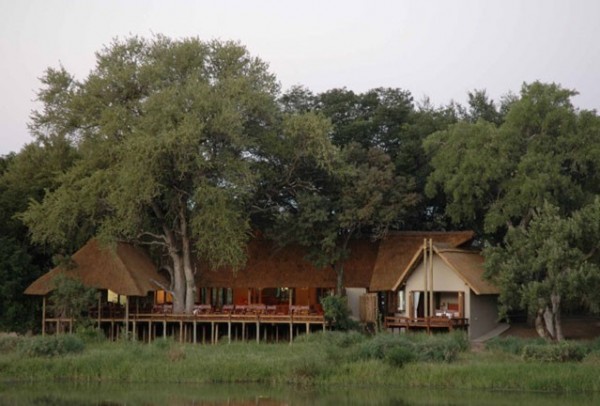
Simbavati River Lodge is an intimate and friendly camp built on the banks of the Nhlaralumi River in the heart of the world famous Timbavati Private Nature Reserve. Shaded by age old Jackalberry and Leadwood trees, Simbavati is warm and welcoming, with a generous contemporary design and accommodation for guests in luxury tented rooms or thatched chalets.


Simbavati takes its name from the local Shangaan language, translated as “the place where the lions come down from the stars”. The focus of the lodge is on the excellent big-5 game viewing, breath-taking views, friendly and knowledgeable staff in an environment where guests are made to feel comfortable and relaxed from the moment they arrive.


Simbavati River Lodge offers game drives in the early morning and evening to ensure game viewing when the animals are most active. Game drives are conducted by experienced rangers and Shangaan trackers in open 4X4 vehicles, with excellent photographic opportunities.


You traverse over 12,000 hectares of the big-5 game country, with lion, leopard, elephant, rhino and buffalo as well as other species such as kudu, zebra, warthog, giraffe, monkey to name a few.


Nocturnal animals, including the big cats, are regularly sighted on night drives. Bird viewing is spectacular, with over 360 recorded species including various eagles, vultures, kingfishers, woodpeckers, buzzards, herons, egrets, owls, weavers.

The Timbavati Private Nature Reserve was initiated in 1956 by a group of land owners concerned about the degradation of this once pristine wilderness area. Timbavati is dedicated to conservation by maintaining the biodiversity of species and is also involved in different research projects.


Simbavati River Lodge is an uncomplicated and down to earth safari experience, guests are encouraged to relax and feel at home. The lounge area is the perfect place to relax on a comfortable couch with a book from the inhouse library or doze off on an afternoon siesta.

During the mid-day heat, recline in a sun lounger or take a dip in our swimming pool.

Children are catered for with an activity plan or increase their wildlife knowledge with a large selection of books at their disposal.

The lodge has a curio shop in which to buy any necessities forgotten at home,  or an African memento to remind you of your visit to Simbavati River Lodge.

Wednesday, September 14, 2011

Darling Wildflower Show 2011


Darling will be buzzing again this spring


While a myriad of pollinators such as wasps, flies, mice and sunbirds are at work in the fields, the fairy godparents of biodiversity wave their magic wands at the Darling Sports Club for the 94th year.


The Darling Sports Club hall will be transfigured into a landscape filled with Darling wildflowers, from the most fragile and rare to those that are easily found.


Stalls with all sorts of tempting and interesting goodies await, while an exhibition tent will showcase all gardening, conservation and landscaping related goods. Wine tastings, talks and art exhibitions will also take place.

Love for the flowers


The Darling Wildflower Show has been presented by the Darling Wildflower Society since 1917, and the work is largely done by volunteers. The work of the society focuses on two significant aspects of Renosterveld, namely its unique character and the urgent need for its conservation. This has led to the recent founding of the Darling Wildflower Trust, and while continuing to support local charities, the income from the show now mainly goes towards conservation initiatives like the Darling Flora Project.


Venue: The Sports Club in Darling

This and that about Darling

Darling is the heartbeat of the West Coast region. The little village lies tucked away between hills of vineyards and golden wheat fields. Here you can still expect to see a horseman cantering through the streets on a Saturday afternoon. A gaggle of geese might waddle into a neighbour's garden to forage. You may witness a funeral procession accompanied by the consolatory gospel sounds of a traditional brass band. Lovingly restored Victorian homes and ancient trees make an idyllic setting for a getaway that promises serenity, nature, culture and much more!

Darling is approximately 72 kilometres or an hour’s drive out of Cape Town.

Acknowledgemt: Safari Now


Monday, September 12, 2011

HANS MERENSKY NATURE RESERVE


Bounded by the Letaba River to the north, the Hans Merensky Nature Reserve covers 5 300 ha of mainly mopane and red bush willow woodland and scrub. The reserve was named in honour of the pioneering South African geologist, Hans Merensky, who donated a water hole to the reserve. The son of missionary Alexander Merensky, the younger Merensky’s prospecting skills were instrumental in the opening of several mines.


Among these were Phalaborwa, the Rustenburg platinum mines and the Alexander Bay diamond fields. The reserve has been stocked with a variety of game, but on account of the dense vegetation the animals can be difficult to spot. Hippo and crocodile inhabit the Letaba River; waterbuck are never far from the river, while giraffe, kudu, waterbuck, impala, bushbuck and Burchell’s zebra are among the species to be seen in the woodlands.


The visitor centre has displays on various aspects of the reserve, and there is an interpretive trail, two nature walks and an easy but delightful three-day overnight trail for visitors who prefer to explore the reserve on foot. The reserve’s checklist of about 280 birds include species such as tambourine dove, green pigeon, several kingfishers, white throated robin and orange breasted bush shrike. For many birders on South African holidays, however, a particular highlight is ticking Arnot’s chat, a species which in South Africa is restricted to mopane woodland.